
The Transformation of Library Science through Artificial Intelligence.
1. Overview and the AI Landscape in 2026
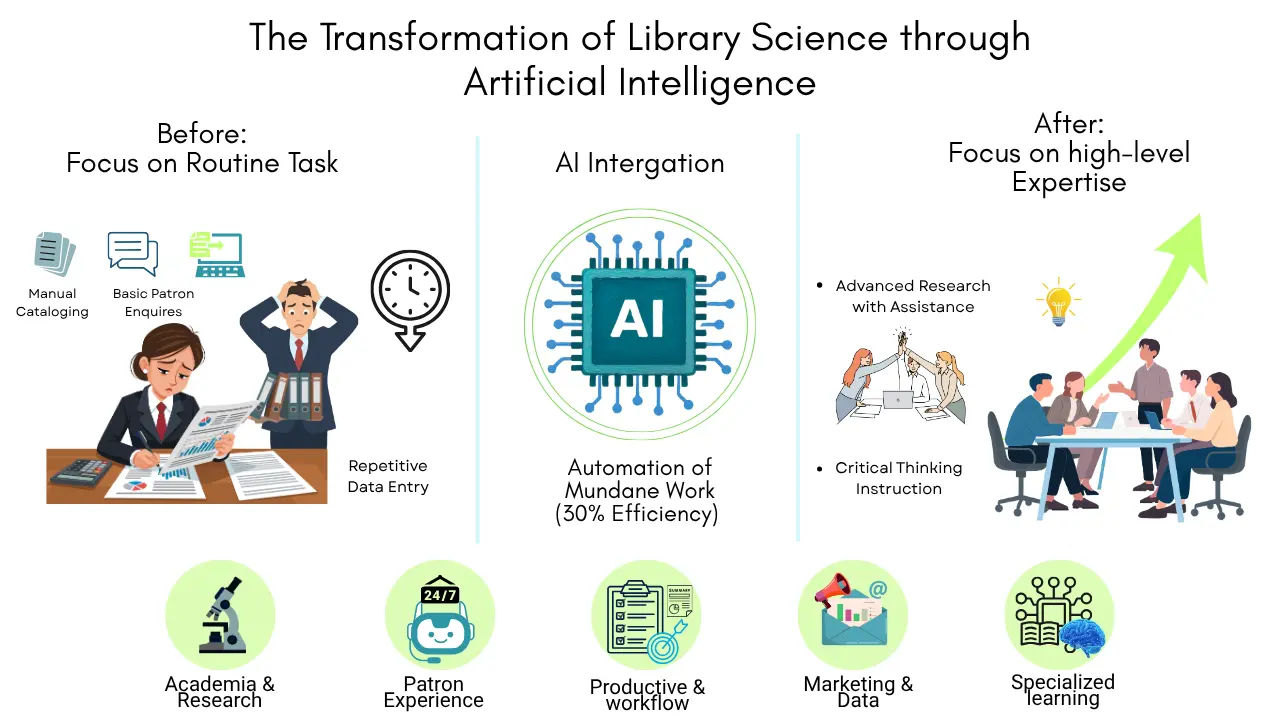
As of 2026, Artificial Intelligence (AI) has shifted from a theoretical idea to a key driver of efficiency in global education. Statistics show that over 65% of educational institutions have adopted AI in their workflows. Libraries, as crucial centers of knowledge, are leading this change. Rather than replacing human expertise, AI tools act as 'mechanical mentors' that take on routine, mundane, and repetitive tasks. This shift allows librarians to concentrate on higherlevel tasks, such as teaching critical thinking, curating specialized collections, and assisting with complex research.
2. Categorized Analysis of AI Tools for Librarians
A. Academia and Research Assistance
Research Discovery and Mapping: Tools like Research Rabbit and OpenRead help librarians discover innovations in library science and gain insights into literary works through automated text analysis. Curation and Credibility: PuzzleLabs helps organize knowledge into easy-to-access formats, while Scite and Consensus ensure that shared information is supported by peer-reviewed research and reliable citations. Collaboration and Citation: Lateral encourages professional collaboration, while EndNote streamlines citation management for grants and academic projects.
B. Enhancing Patron Experience
24/7 Virtual Assistance: Platforms like Botsonic, QuickChat, Tiledesk, and Forethought allow libraries to use chatbots to respond to basic inquiries, which reduces helpdesk loads and enhances self-service options. Integrity and Access: Copyscape protects institutional integrity by detecting plagiarism, while AudioPen and Flixier enhance accessibility by turning audio and video content into searchable text.
C. Librarian Productivity and Workflow Automation
Administrative Efficiency: MEM acts as a personal assistant for task management. Dante and Grammarly serve as AI editors, ensuring clear and error-free communication. Content Synthesis: ChatPDF, CodeframeAI, SciSpace Copilot, and AI Summarizer help librarians quickly digest lengthy research papers and complex documents, offering concise summaries for patrons. Technical Processing: Cataloging.ai automates metadata generation, significantly cutting down on manual data entry.
D. Marketing, Design, and Data Visualization
Visual Content Creation: Canva AI, Craiyon, Midjourney, and Lexica empower librarians to create engaging marketing materials and interactive exhibits without needing advanced graphic design skills. Copywriting and Engagement: Copy AI and AnyWord help generate social media posts and headlines to boost patron engagement. Data-Driven Decision Making: Tableau changes complicated library statistics into dashboards for stakeholders
E. Specialized Learning Support: CodeframeAI
CodeframeAI is a major development for academic libraries. It specifically helps students who struggle with document understanding and information retention. It turns difficult texts into thematic summaries, mind maps, and structured notes. It also offers support in multiple languages, helping non-English speaking students access materials in their preferred language, which enhances overall accessibility.
3. Strategic Implementation and Governance
Technical Infrastructure and Tool Selection
Shifting to AI requires a careful look at technical infrastructure. Libraries must choose between cloud-based solutions or local implementations based on budget, staff skills, and data sensitivity. Data sovereignty is crucial for academic institutions that manage sensitive research. A phased deployment strategy, as suggested by IBM's framework, can help reduce disruptions.
Human-Centered Transition and Training
Successful implementation depends on AI literacy. Organizations that use structured, rolebased learning paths experience a 40% higher success rate in adopting AI. Training should cover not only the technical aspects but also the ethical implications and limitations of generative AI, such as transformer architectures and probability-based outputs.
4. Challenges and Mitigation Strategies
Staff Resistance: This often comes from fears of job loss. Mitigation involves showing that AI is a tool to enhance, not replace, jobs. Technical Conflicts: There may be integration challenges with existing Library Management Systems (LMS). Libraries should maintain a budget contingency of 20-30% for troubleshooting and hardware updates. Data Quality: AI performance relies on the quality of the cataloging standards. Preimplementation audits of data are essential.
5. Action Items and Stakeholder Responsibilities
Library Directors: Set up governance structures and clear system prompts to define the AI agent's role, tone, and operational limits. Technical Specialists: Create and maintain 'toolboxes' (database search functions, API integrations) and track performance metrics. Reference Librarians: Act as the human-in-the-loop for verification protocols to ensure that AI-generated recommendations are accurate and contextually appropriate. Institutional IT: Ensure data security and compliance with licensing agreements when connecting AI with subscription databases. Thus integrating AI in libraries is not just a technical upgrade; it’s a rethinking of library services. While automation can enhance efficiency by up to 30%, the human factor is still crucial.
Actionable Recommendations: 1. Start with pilot tests for single-use cases (like a chatbot) before expanding. 2. Keep transparent documentation of AI research to avoid repeating errors. 3. Focus on tools that offer multilingual and accessibility features to ensure inclusive service.